The Science of Texas Horsemint
Nature’s Native Powerhouse
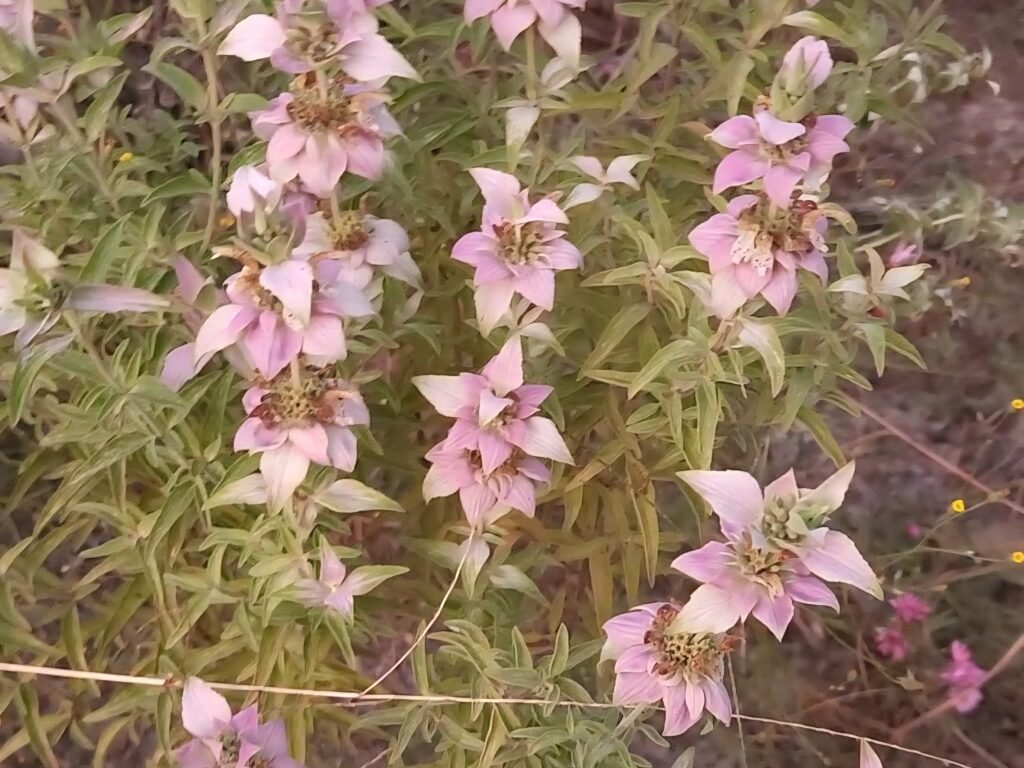
Across the sunburnt prairies and sandy ridges of Central Texas, a pale pink mint quietly produces some of the strongest aromatic oils in North America.
Most folks walk right past it, never realizing this humble wildflower — Spotted Horsemint (Monarda punctata) — often rivals or surpasses oregano (Origanum vulgare) in the very compounds that made oregano famous.
Where Mediterranean oregano became popular for its carvacrol-heavy punch, horsemint evolved to survive hotter, harsher, drier conditions — and those stresses produce exceptionally high levels of thymol, one of the most widely researched natural antimicrobial compounds in the plant kingdom.
If oregano is the “spicy hammer,” horsemint is the precision tool — strong, stable, aromatic, and far gentler on the throat.
THE CHEMISTRY: WHY HORSEMINT FREQUENTLY BEATS OREGANO ON PAPER
Scientific analyses of Monarda punctata essential oil place it among the most thymol-rich plants ever documented.
Head-to-Head Comparison
| Compound | Function | Oregano (O. vulgare) | Horsemint (M. punctata) |
|---|---|---|---|
| Thymol | Broad-spectrum antimicrobial; antioxidant; membrane disruption | 20–30% | 30–50%+ (often higher in wild drought-grown plants) |
| Carvacrol | Fast antimicrobial; strong but irritating | 60–80% | 20–40% |
| p-Cymene | Enhances uptake of thymol & carvacrol | Trace–15% | 10–25% |
| Geraniol / Linalool | Soothing, anti-inflammatory, aromatic | Trace | 5–15% |
| Total Phenolics | Antioxidant strength | Moderate | High — often significantly higher |
Sources: USDA Phytochemical Database, Duke’s Handbook of Medicinal Herbs, National Library of Medicine – Monarda punctata Phytochemistry
Why this matters
- Thymol is the compound supported by the broadest range of antimicrobial literature.
- Horsemint naturally leans toward a thymol-dominant profile, which many find easier on the system.
- Carvacrol-heavy herbs like oregano can burn the throat, irritate mucous membranes, and feel harsh in concentrated form.
- Horsemint’s chemistry produces a strong yet smooth aromatic profile — naturally buffered by geraniol, linalool, and other softening constituents.
In plain language:
Horsemint often delivers the benefits people seek from oregano, without the overpowering bite.
WHAT THE STUDIES SHOW ABOUT MONARDA PUNCTATA
Documented Antibacterial Mechanisms
A major peer-reviewed study on M. punctata found that its essential oil disrupts bacterial membranes, generates reactive oxygen species (ROS), and shows strong activity against Streptococcus pyogenes and MRSA
Study: https://pmc.ncbi.nlm.nih.gov/articles/PMC4270556/
Chemical Consistency Across Studies
Research on multiple Monarda species repeatedly shows high thymol and/or carvacrol chemotypes, strong antioxidant potential, and anti-inflammatory effects from minor constituents
This broader Monarda evidence strengthens the understanding of M. punctata’s phytochemistry.
TEXAS HEAT CREATES A STRONGER PLANT
In the Lamiaceae family (mint family), harsher environments often mean higher essential oil content and phenolic concentrations. In other words, increased thymol and carvacrol production.
Horsemint thrives under intense sunlight, drought, nutrient-poor sandy soils, and high wind exposure.
These exact pressures force the plant to create strong aromatic oils for self-defense.
In many published analyses, wildcrafted horsemint shows higher thymol percentages than cultivated oregano, more balanced minor compounds, and greater stability after extraction
This is one of the reasons wild Texas horsemint is chemically richer than most grocery-store oregano.
REAL-WORLD APPLICATIONS
This section discusses only the plant and published research, not products.
Antimicrobial Strength
Oregano hits fast and hard — but can be sharp and irritating due to carvacrol’s volatility.
Horsemint hits steadily and deeply — thymol’s stability keeps its action consistent and smoother.
Throat Comfort & Gentleness
Carvacrol-heavy herbs are known for throat burn, stomach discomfort, and mucosal irritation.
Horsemint’s chemistry, especially when thymol-dominant, tends to be less harsh, less volatile, and more balanced.
This is a key distinction:
Horsemint’s antimicrobial compounds typically feel gentler in use than oregano’s.
Inflammation & Oxidative Stress
Horsemint contains:
- Rosmarinic acid
- Linalool
- Geraniol
- Flavonoids
These have documented anti-inflammatory and antioxidant properties in plant studies — something oregano often lacks in meaningful amounts, particularly when taken in the popular oil form.
Shelf Stability
Thymol is significantly more stable than carvacrol.
Oregano oils degrade faster; horsemint’s chemistry remains intact for longer periods.
TRADITION MEETS RESEARCH
Long before thymol appeared in laboratory papers, Indigenous groups and early herbalists used horsemint teas, steam inhalations, topical washes, and aromatic preparations
Its traditional uses consistently aligned with cleansing, clarifying, and supporting the body through seasonal challenges
Modern science now explains why those traditions existed — because horsemint is chemically strong, naturally balanced, and exceptionally adaptive.
THE BOTTOM LINE: WHY MANY CONSIDER HORSEMINT “THE SOUTH’S OREGANO — BUT BETTER”
Based on plant chemistry, environmental adaptation, and published research, horsemint demonstrates:
- Higher thymol levels than many oregano varieties
- Less throat burn and irritation
- Richer antioxidant and anti-inflammatory compounds
- Greater chemical stability
- Enhanced potency from harsh-climate growth
It doesn’t replace oregano — it simply excels in different and often more well-rounded ways.
Horsemint is what happens when a plant is forged by heat, drought, and survival:
stronger aromatics, deeper chemistry, and a smoother profile than the Mediterranean classic.
DISCLAIMER
This article summarizes scientific research on plants only. It does not describe or imply any effect of HK Naturals’ products and is not intended to diagnose, treat, or cure any condition. For educational purposes only.