
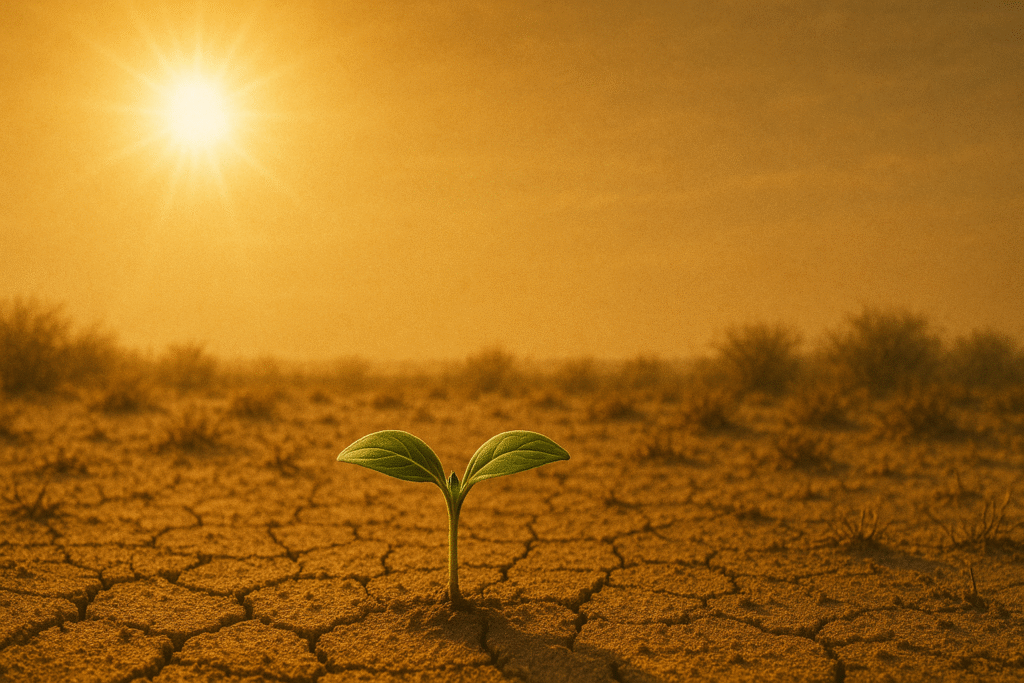
Environmental Stress & Plant Chemistry
Why Harsh Conditions Create Stronger Botanicals
Plants are remarkable chemical engineers. Unlike animals, they cannot flee drought, heat, insects, UV radiation, or nutrient-poor soils. Instead, they adapt — not by moving, but by building complex defensive chemistry within their own tissues.
This process is the foundation of phytochemistry, and it’s the reason certain environments — especially hot, dry, sandy, nutrient-poor regions like Central Texas — produce plants with higher concentrations of aromatic oils, polyphenols, tannins, terpenes, and protective compounds.
In other words:
Stress builds strength.
And nowhere is this more evident than in the wild botanicals of the American South.
1. Why Plants Make Defensive Compounds in the First Place
Plants produce secondary metabolites — such as terpenes, phenolics, flavonoids, tannins, alkaloids, and antioxidants — not for human benefit, but for their own survival.
These compounds defend against:
- Heat & drought stress (abiotic stress)
- UV radiation
- Oxidative stress
- Insects and herbivores
- Fungal and bacterial threats
- Soil nutrient deficiency
- Mechanical damage from wind or grazing animals
Secondary metabolites act as:
- Natural sunscreens (anthocyanins, phenolics)
- Water retention regulators (osmoprotectants)
- Defense chemicals (thymol, carvacrol, tannins)
- Stress-signaling antioxidants (ellagic acid, rosmarinic acid)
- Aromatic deterrents (terpenes, volatile oils)
In evolutionary terms, the harsher the environment, the more heavily plants rely on chemical defenses.
2. What the Research Says: Stress Elevates Protective Compounds
Across multiple plant families and ecological systems, research consistently shows:
Drought → Increases phenolic content
Plants under water stress accumulate:
- Higher total polyphenols
- Increased flavonoids
- Enhanced antioxidant activity
- More concentrated aromatic oils in Lamiaceae species
This is documented in mint family plants such as Monarda, Thymus, Origanum, and Rosmarinus.
Heat → Boosts aromatic oils and antioxidant responses
High temperatures stimulate production of:
- Terpenes (thymol, carvacrol, linalool)
- Phenolic acids
- Stress-protective pigments
Heat forces the plant to guard its cellular structure, increasing chemical density.
Poor soil → Enhances tannin and phenolic development
Nutrient-poor substrates, such as sugar sand, reduce growth rate but increase chemical complexity.
Plants invest energy into chemical survival, not size.
UV radiation → Triggers anthocyanin and resveratrol-type compounds
This is especially important for fruits such as muscadine, where sun exposure increases:
- Skin thickness
- Pigmentation density
- Antioxidant compounds
Fungal pressure → Encourages defensive phenolics
Plants in humid, fungal-prone regions (like the Southeast) develop:
- Thicker skins
- More tannins
- Stronger antimicrobial secondary metabolites
This is why muscadine, a grape adapted to humid Southern forests, developed chemistry far stronger than European grapes.
3. Stress Physiology: How Plants Convert Hardship Into Chemistry
Oxidative Stress → Antioxidant Production
When a plant faces heat, drought, or UV radiation, reactive oxygen species (ROS) accumulate.
To survive, the plant increases synthesis of:
- Flavonoids
- Phenolic acids
- Anthocyanins
- Ellagitannins
- Terpenoid antioxidants
This biochemical cascade makes the plant more resilient — and also increases the concentration of compounds researchers study today.
Mechanical & Herbivore Stress → Volatile Oil Production
When insects feed or wind breaks tissue, plants synthesize volatile oils as:
- Deterrents
- Antimicrobials
- Rapid-response defense chemicals
This is documented extensively in Monarda, Thymus, and Origanum species, where thymol and carvacrol production increases under repeated environmental pressure.
Water Deficit → Concentration of Oils & Polyphenols
Drought reduces water content inside plant tissues.
This does two things:
- Increases potency per gram of plant material
- Triggers deeper chemical storage in the tissues
In wild Texas horsemint, this often results in:
- Higher thymol percentages
- Higher p-cymene and γ-terpinene levels
- More robust aromatic density
In muscadine, drought encourages:
- Thicker skins
- Higher tannins
- Stronger pigment formation
- Increased phenolic content
4. Texas: A Stress Ecosystem That Builds Potent Plants
Central Texas presents an extraordinary combination of environmental pressures:
Extreme Heat
100–110°F summers intensify aromatic oil production and phenolic density.
Drought Cycles
Irregular rain patterns force plants to adapt chemically, not physically.
Sandy, Nutrient-Poor Soil
Sugar sand doesn’t hold nutrients or water, stressing roots continuously.
Wind Exposure
Frequent mechanical stress increases volatile oil activity in mint family plants.
High UV Exposure
Intense ultraviolet radiation increases pigmentation and antioxidant synthesis.
Insect & Fungal Pressure
High humidity and warm nights encourage defense compounds in:
- Grapes
- Mints
- Native shrubs
- Wildflowers
Together, these factors create what botanists call a chemical stress crucible — an environment where plants must build stronger, more resilient chemistry to survive.
This is why Monarda punctata and Vitis rotundifolia from Texas sandy soils frequently show richer phytochemical profiles than their cultivated or irrigated counterparts.
5. Case Studies: Horsemint & Muscadine Under Stress
Horsemint (Monarda punctata)
Native to sandy prairie habitats, horsemint thrives in:
- Full sun
- Dehydrated soils
- High heat
- Wind
- Nutrient-scarce conditions
Stress increases its:
- Thymol (major antimicrobial phenolic)
- p-Cymene & γ-terpinene (synergistic aromatic oils)
- Total volatile oil content
- Minor constituents like linalool and geraniol
This is why wildcrafted or drought-grown horsemint often shows stronger aromatics than irrigated or shade-grown plants.
Muscadine (Vitis rotundifolia)
Muscadine produces the highest phenolic content when exposed to:
- High UV
- Rain/drought variability
- Sandy or acidic soils
- Southern fungal pressure
Stress increases:
- Ellagic acid
- Ellagitannins
- Anthocyanins
- OPC tannins
- Skin thickness
- Seed chemical richness
Muscadine isn’t just tougher than European grapes — its entire biochemistry reflects a plant adapted to survival through chemical strength.
6. Why Stress-Grown Plants Differ From Cultivated Plants
Cultivated plants are often:
- Irrigated
- Fertilized
- Shaded
- Protected from insects
- Bred for sweetness, not strength
- Grown for size, not chemical richness
These conditions reduce chemical stress, which reduces:
- Aromatic oil concentration
- Phenolic density
- Pigmentation depth
- Skin thickness
- Tannin complexity
Wild plants — or plants grown under natural stress — are chemically richer because they have to be.
7. Ecological & Research Significance
Environmental stress is now recognized as one of the key drivers of:
- Phytochemical evolution
- Antioxidant biosynthesis
- Aromatic oil enhancement
- Plant-pathogen defense strategies
This means regions like Central Texas — once considered tough growing environments — are now areas of botanical interest, producing plants with exceptional chemical profiles.
Conclusion: Stress Creates Stronger Plants — By Design
From the mint-covered prairies to muscadine-laced fencelines, the plants that survive the Texas heat do so by building deep, potent, adaptive chemistry.
Environmental stress doesn’t weaken these plants.
It forges them.
And understanding that relationship — between land, stress, and phytochemical response — is essential for anyone studying or working with wild botanicals.
This is why HK Naturals Research continues to document environmental factors, phytochemical data, and ecological influences that shape the plants growing on our land.